


Page 15 - 智慧韌性 農糧永續
P. 15
臺灣農 鄉土風
                                                                                  Taiwan’s Agricultural Tapestry


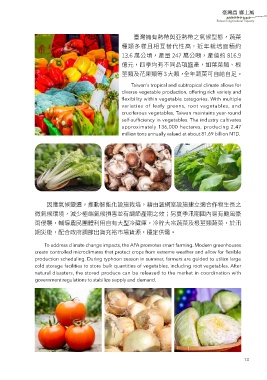
                                                臺灣擁有熱帶與亞熱帶之氣候型態,蔬菜
                                              種類多樣且相互替代性高,近年栽培面積約
                                              13.6 萬公頃,產量 247 萬公噸,產值約 816.9

                                              億元,四季均有不同品項盛產,如葉菜類、根
                                              莖類及花果類等3大類,全年蔬菜可自給自足。
                                                Taiwan's tropical and subtropical climate allows for
                                              diverse vegetable production, offering rich variety and
                                              flexibility within vegetable categories. With multiple
                                              varieties of leafy greens, root vegetables, and
                                              cruciferous vegetables, Taiwan maintains year-round
                                              self-sufficiency in vegetables. The industry cultivates
                                              approximately 136,000 hectares, producing 2.47
                                              million tons annually valued at about 81.69 billion NTD.


                因應氣候變遷,推動智能化設施栽培,藉由溫網室設施建立適合作物生長之

              微氣候環境,減少極端氣候損害並有調節產期之效;另夏季汛期國內易有颱風豪
              雨侵襲,輔導農民團體利用自有大型冷藏庫,冷貯大宗蔬菜及根莖類蔬菜,於汛
              期災後,配合政府調節出貨充裕市場貨源,穩定供需。
                To address climate change impacts, the AFA promotes smart farming. Modern greenhouses
              create controlled microclimates that protect crops from extreme weather and allow for flexible
              production scheduling. During typhoon season in summer, farmers are guided to utilize large
              cold storage facilities to store bulk quantities of vegetables, including root vegetables. After
              natural disasters, the stored produce can be released to the market in coordination with
              government regulations to stabilize supply and demand.


                                                                                            13

